


Choose handbag size by starting with the items you carry, then checking usable interior space, opening clearance, closure, shape, and strap drop. Small, medium, and large labels are not standardized, and exterior dimensions do not reveal every part of usable capacity.
Start With What You Actually Carry
Arrange your essentials on a table. Separate them into compact items, everyday additions, and occasional work equipment. Identify the largest rigid object, such as a tablet, notebook, or laptop, because it sets a minimum opening and interior requirement.
Do not choose the largest possible bag by default. Extra space can make organization harder and encourage items to accumulate.
How to Read Handbag Measurements
Width, Height, and Depth
Width usually runs from side to side, height from base to top, and depth from front to back. Product conventions can vary, especially with curved or tapered bags, so use a diagram when one is provided.
Opening
The opening may be narrower than the widest exterior point. Zippers, gussets, curved corners, and top panels can reduce clearance. A rigid item must pass through the opening before the interior dimensions matter.
Strap Drop
Strap drop describes the vertical distance from the top of the bag to the top of the strap when hanging. It helps estimate where a shoulder bag may sit, but clothing, body shape, strap construction, and load also affect placement. Do not treat strap drop as a comfort guarantee.
Exterior Size vs Usable Interior
Seams, lining, padding, dividers, pockets, and closure hardware use space. Soft sides can expand around some objects, while rigid structures may preserve shape but offer less flexibility. Compare usable interior measurements when available and allow for any case or sleeve.
If those measurements are missing, treat fit as unverified rather than subtracting an estimated allowance.
How Shape and Closure Affect Capacity
A rectangular tote may accommodate flat items differently from a curved hobo or compact crossbody. A narrow zipper opening can limit a rigid object even when the body appears wide enough. A magnetic snap can draw the top inward, and a center compartment can divide one large space into smaller zones.
These are design variables, not universal rules. Inspect the individual product.
Match Capacity to the Scenario
For compact carry, list the phone, wallet, keys, and personal items that must fit. For everyday carry, add only the items used routinely. For work-capacity bags, measure the exact device with its sleeve and verify the opening, interior, closure clearance, and stated capacity.
Use a Favorite Bag as a Benchmark
Measure a bag you already find practical. Record its exterior dimensions, opening, usable interior, and strap drop. Note what fits comfortably and what becomes difficult to reach. This creates a personal reference that is more useful than an undefined size label.
Verified ELLE Capacity Examples
ELLE's current product information provides several levels of stated capacity, although exact dimensions and empty weights remain unavailable.
- The ELLE Classic Leather Crossbody Bag states room for a phone, power bank, wallet, lipstick, and compact essentials.

- The ELLE Women's Monogram Black Shoulder Bag states room for an iPad and daily essentials.

- The ELLE Monogram Work Tote Bag states capacity for a 13-inch laptop.

- The ELLE Leather Tote Bag states capacity for a 14-inch laptop.
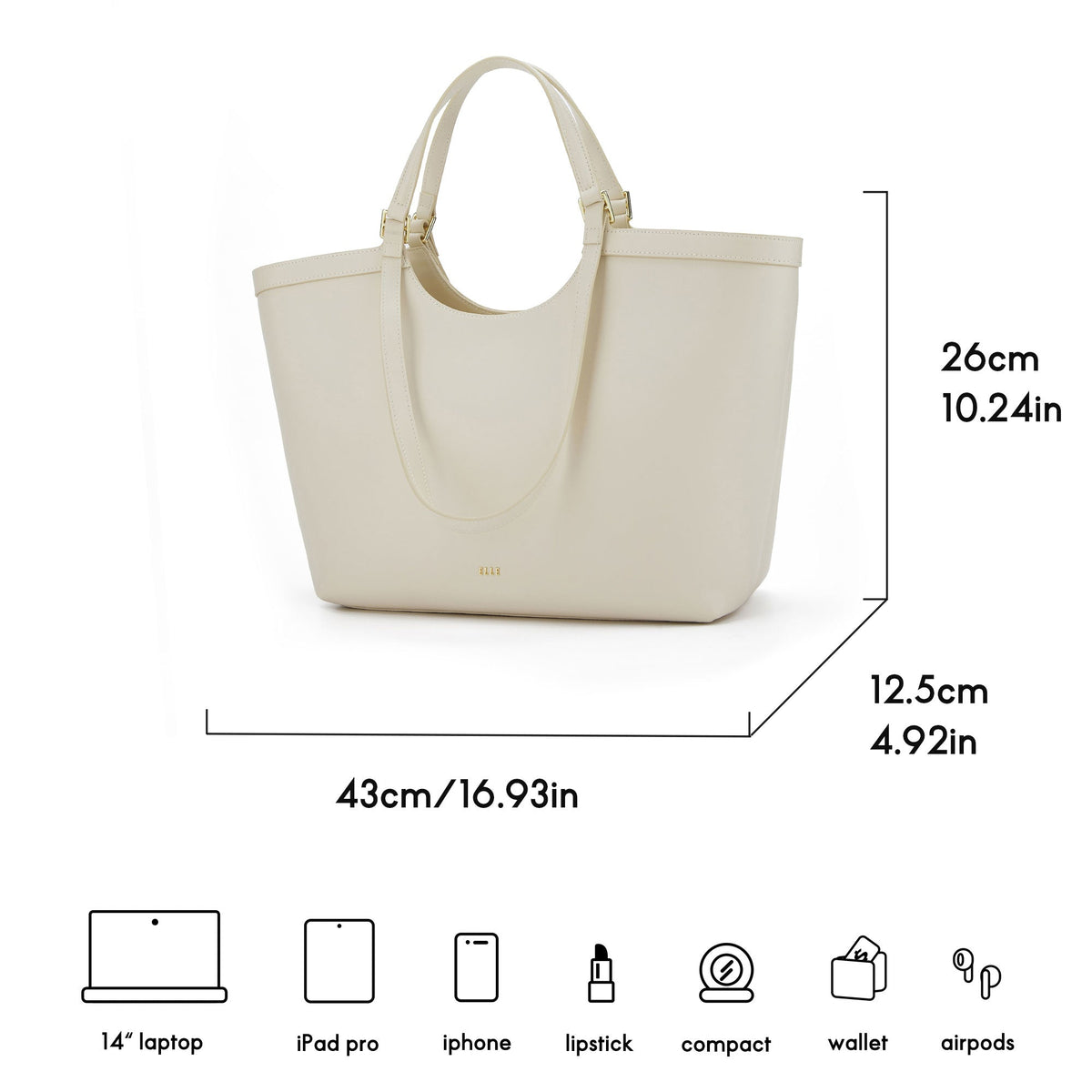
These statements are useful comparison evidence, not guarantees for every device with the same screen size. Browse ELLE crossbody bags, shoulder bags, and tote bags by your measured load.
Handbag-Size Checklist
- List the items you truly carry.
- Measure the largest rigid item and any sleeve.
- Compare the opening and usable interior, not only the exterior.
- Check how shape, dividers, and closure use space.
- Review strap drop and carrying options without assuming comfort.
- Use a favorite bag as a benchmark.
- Treat missing measurements as unavailable, not as an invitation to estimate.


